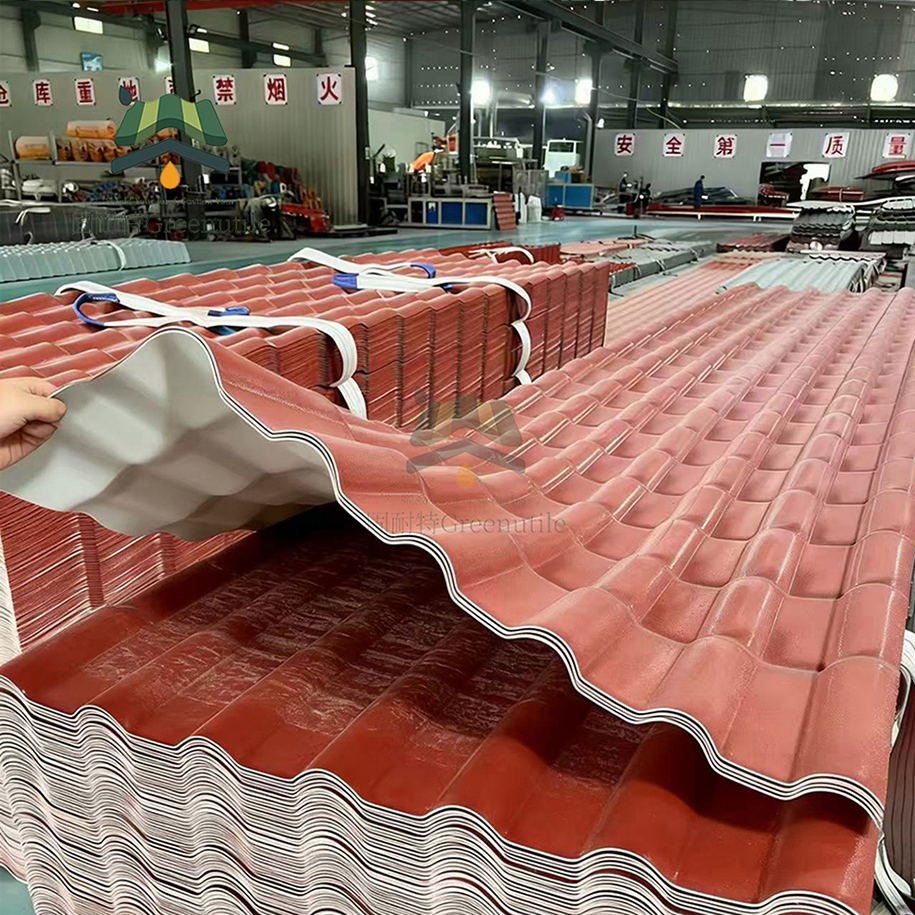
Learning how to identify genuine ASA resin tile quality test methods matters because two tiles that look identical on a product page can perform completely differently in real use — and you don't need a lab to tell them apart. A fake or low-grade ASA tile might look the same in photos but it will fade, crack, or become brittle within 3–5 years, while a genuine one lasts 20–30. The good news is that most quality shortcuts leave visible clues you can detect with just a sample, a few simple tools, and the right things to look for. This guide walks you through 7 practical tests — from a visual cross-section check to a burn test to weighing — so you can spot bad product before you place a bulk order.
1. What are the 7 quality tests, and how do you do each one?
When you're figuring out how to tell if ASA synthetic tile is good quality, you don't need fancy equipment — most quality shortcuts leave physical clues you can detect with your eyes, your hands, and a few simple tools.
Suppliers cut costs in predictable ways: thinning the ASA layer, using recycled PVC, loading the formula with calcium filler, skipping UV stabilizers, or passing off a coated product as co-extruded. Each of these shortcuts leaves a visible or measurable clue. The key is knowing what to look for and what "normal" looks like.
Test 1: Cross-section visual check (the fastest test)
What to do: Look at the cut edge of the tile sample. Hold it up to a light if needed.
What you're looking for: A genuine co-extruded ASA tile will show a distinct colored surface layer — usually 0.15–0.30mm thick — on top of a different-colored base layer (typically white or light gray for virgin PVC). The boundary between layers should be clean and sharp, not blurry or blended.
Red flags:
No visible ASA layer at all — it's just uniform color all the way through
The "ASA layer" is extremely thin (less than 0.1mm) and hard to see without magnification
The boundary is fuzzy or uneven — this can indicate a surface coating rather than true co-extrusion
This test takes 10 seconds and catches the most common scam: passing off a painted or coated PVC tile as "ASA resin tile."
Test 2: Thickness measurement with calipers
What to do: Use a digital caliper to measure the tile thickness at multiple points — center, edge, near a wave crest, near a valley.
What you're looking for: The thickness should match the supplier's claimed spec, and it should be consistent across the tile (variation of less than ±0.1mm is normal).
Red flags:
Actual thickness is 0.2–0.3mm less than the advertised spec (some suppliers round up aggressively)
Thickness varies significantly across the tile — thinner in some spots than others
The surface layer is not uniformly thick when viewed in cross-section
A tile that's advertised as 3.0mm but measures 2.7mm isn't a small difference — it's roughly 10% less material, and that's 10% less structural strength, UV protection, and impact resistance.
Test 3: Weighing (detects filler loading)
What to do: Cut a precisely measured sample — for example, a 100mm × 100mm square — and weigh it on a digital scale that reads to 0.1 grams. Then calculate weight per square meter.
What's normal: A 3.0mm premium ASA tile should weigh roughly 4.0–4.5 kg/m². A 2.5mm tile should be about 3.0–3.5 kg/m².
Red flag: Heavier than normal for the stated thickness. If a 3.0mm tile weighs 5.0+ kg/m², it's almost certainly loaded with heavy calcium carbonate filler. More weight does not mean better quality — it means less actual PVC polymer and more cheap filler. A heavily-filled tile is more brittle, more prone to cracking, and ages faster.
Test 4: Bend / impact test (checks toughness)
What to do: Take a small strip cut from the tile edge (about 100mm × 30mm) and bend it between your fingers. Or, if you have the setup, drop a 1kg steel ball from 1 meter height onto the tile surface.
What you're looking for: The tile should bend without snapping, and it should spring back to its original shape reasonably well. After the steel ball drop, there should be no cracks or fractures on the surface.
Red flags:
The tile snaps or cracks when bent — brittle, likely high filler or recycled content
It stays bent permanently and doesn't spring back — poor molecular structure
Visible cracks or impact marks after the steel ball drop — low impact resistance
This test is especially important if you're sourcing for cold climates or areas with hail.
Test 5: The synthetic resin tile burning test identification method (detects material composition)
What to do: Hold a small piece of the tile (cut from the edge) with tweezers and touch it to a flame (a lighter or candle works). Let it burn for 2–3 seconds, then remove the flame and observe.
What genuine ASA/PVC should do:
Burns but self-extinguishes within 1–2 seconds after you remove the flame (B1 fire rating)
Yellow flame with greenish bottom edge (characteristic of PVC, which contains chlorine)
White or gray smoke — not thick black smoke
Smells faintly sweetish-pungent — like burnt plastic but not acrid or rubbery
The burned residue is hard and black, not dripping and stringy
Red flags:
Keeps burning after you remove the flame — poor fire retardant, likely not B1 rated
Thick black, sooty smoke — contains ABS or other cheap polymer blends
Drips flaming material — major fire safety hazard
Smells like burnt rubber or has a strong acrid chemical smell — wrong material composition
Important: do this test outdoors or under a fume hood. Burning PVC releases hydrochloric acid fumes — don't breathe the smoke directly. The synthetic resin tile burning test identification method is one of the fastest ways to spot a fake or low-quality tile, because material composition is hard to fake.
✅ Bottom line: the cross-section check, weighing, and burn test catch 90% of quality problems — do all three before placing any sizable order.
2. What do the test results actually mean, and which grade should you buy?
Running all 7 tests gives you a clear picture of product quality — and how to tell if ASA synthetic tile is good quality ultimately comes down to matching the tile's actual grade to your project's real needs, because paying for a premium tile when you only need a standard one is wasteful, and buying a budget tile for a permanent building is a mistake.
Based on test results, tiles generally fall into three quality tiers. Here's how to interpret what you find and what each tier is actually good for:
| Quality Tier | Cross-Section | Weight | Burn Test | Bend Test | Typical Lifespan | Best For |
| Premium | Clear ASA layer ≥0.15mm, sharp boundary | On spec, 4.0–4.5 kg/m² (3.0mm) | Self-extinguishes, white/gray smoke | Bends, springs back | 20–30 years | Permanent buildings, villas, coastal/high-UV areas, public projects |
| Standard | Visible ASA layer 0.08–0.12mm | On spec, 3.5–4.0 kg/m² (2.5mm) | Self-extinguishes, some dark smoke | Bends, minor permanent deformation | 10–15 years | General residential, warehouses, moderate climates |
| Budget / Low grade | No visible ASA layer or very thin (<0.06mm) | Heavy for thickness (filler loaded) | May continue burning, thick black smoke | Snaps or cracks easily | 3–5 years | Temporary sheds, short-term projects, low-budget situations |
A practical sourcing strategy
You don't need to test every supplier's sample with all 7 methods. Use this three-stage approach:
Stage 1: Document check (free, takes 15 minutes). Ask 3–5 suppliers for their spec sheets and test reports. Eliminate any that can't provide independent third-party test data. This usually narrows the field by half.
Stage 2: Order samples (50 per supplier for courier). Run tests 1–4 (cross-section, thickness, weight, bend) on the samples from the remaining suppliers. These are quick, non-destructive, and catch the most obvious quality issues. Eliminate any supplier whose sample clearly fails.
Stage 3: Deep testing (optional, for large orders). For orders over 5,000m², run tests 5–6 (burn test, surface check) on your top 2–3 candidates. This is also the point where you might consider sending a sample to a local testing lab for independent verification — a few hundred dollars of testing can save you from a six-figure bad order.
The most important thing to remember
Price and quality generally correlate, but not perfectly. The most expensive tile isn't always the best, and the cheapest tile is almost always a bad deal for permanent construction. The real value is in finding a supplier that delivers a genuinely good product at a fair price — and the way you find that is by testing, not by trusting marketing claims.
✅ Bottom line: use document screening first, then sample testing, then deep testing for large orders — and match the quality tier to your project's actual lifespan requirement.
FAQ
Q: How to identify genuine ASA resin tile quality test methods that really work — which ones are most reliable?
A: The three most reliable at-home tests are: cross-section check (catches fake or missing ASA layer), weighing (catches filler loading), and the burn test (catches material composition and fire rating). Done together, these three catch probably 90% of quality issues. When people ask about how to identify genuine ASA resin tile quality test methods that actually work, these are the top three — no lab equipment needed. The documentation check is also essential — but you need to verify that the reports match the actual product, which is where the physical tests come in.
Q: Can a tile have a genuine ASA layer but still be low quality — and is this part of how to tell if ASA synthetic tile is good quality?
A: Yes — the ASA layer is important but it's not the whole story. The PVC base layer quality matters too. A tile with a genuine but thin ASA layer (say 0.08mm) on top of a recycled or heavily-filled PVC base will still age quickly. The ASA layer prevents UV degradation of the surface, but the base material still needs to be structurally sound. That's why the bend test and weight test matter — they tell you about the base material quality, not just the surface layer.
Q: Is the synthetic resin tile burning test identification method safe to do at home?
A: Yes, with proper precautions. Burn a small piece (10–20mm square), do it outdoors or in a well-ventilated area, use tweezers or pliers to hold the sample, and don't breathe the smoke directly. PVC combustion produces hydrochloric acid fumes — they're irritating but not dangerous in small quantities from a tiny sample. Have a glass of water or fire extinguisher nearby just in case. And if you're uncomfortable doing a burn test, the cross-section check and weighing test will still catch most quality issues without any fire involved.
Send us your tile samples or tell us which suppliers you're evaluating — our engineering team will walk you through a complete how to identify genuine ASA resin tile quality test checklist specific to your project type and climate, for free. We'll also help you interpret test reports and tell you whether a quoted product is genuinely worth the price.
Published: September 2026 | By Engineering Team